MSc στη Διεθνή Διοίκηση Τουρισμού και Επιχειρήσεων Φιλοξενίας

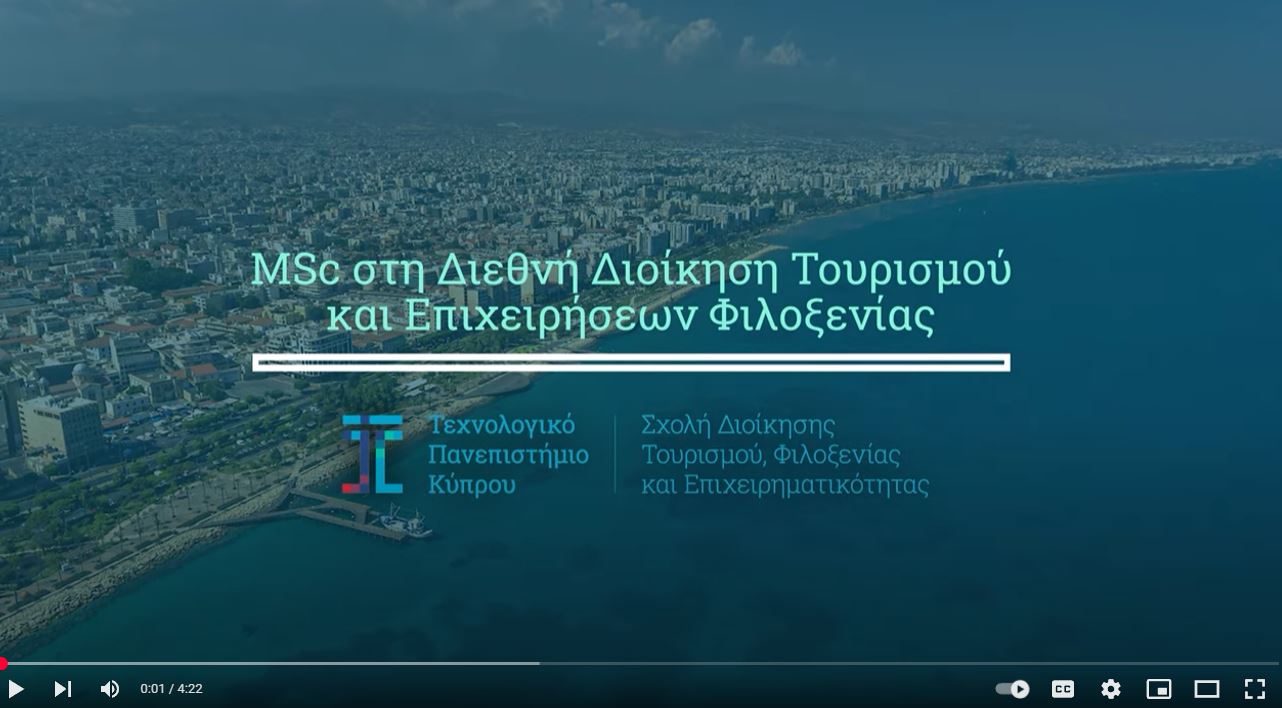
Το Μεταπτυχιακό Πρόγραμμα Σπουδών (MSc) στη Διεθνή Διοίκηση Τουρισμού και Φιλοξενίας (International Tourism and Hospitality Management) αποτελεί μεταπτυχιακό πρόγραμμα του Τεχνολογικού Πανεπιστημίου Κύπρου και προσφέρεται από το Τμήμα Τουρισμού, Φιλοξενίας και Επιχειρηματικότητας, με έδρα τη Λεμεσό. Όπως υποδηλώνει και ο τίτλος του, το πρόγραμμα επικεντρώνεται στη διοίκηση του τουρισμού σε διεθνές επίπεδο και στη διαχείριση επιχειρήσεων φιλοξενίας, συνδυάζοντας τις στρατηγικές, οργανωτικές και επιχειρηματικές διαστάσεις δύο άρρηκτα συνδεδεμένων κλάδων.
Το πρόγραμμα απευθύνεται σε αποφοίτους που επιθυμούν να εμβαθύνουν τις γνώσεις τους στη διεθνή βιομηχανία του τουρισμού και της φιλοξενίας και να προετοιμαστούν για διοικητικές, ηγετικές και εξειδικευμένες θέσεις στον τομέα. Προσεγγίζει τον τουρισμό ως ένα παγκόσμιο φαινόμενο, εξετάζοντας τους τουριστικούς προορισμούς, τις αγορές, τους ταξιδιώτες και τους οργανισμούς που τους εξυπηρετούν, ενώ παράλληλα αναλύει τις αρχές αποτελεσματικής διοίκησης επιχειρήσεων φιλοξενίας σε ένα ολοένα πιο ανταγωνιστικό διεθνές περιβάλλον.
Στόχος του μεταπτυχιακού προγράμματος είναι η εκπαίδευση υψηλού επιπέδου επαγγελματιών, ικανών να ηγηθούν, να διοικήσουν και να προωθήσουν την καινοτομία στους τομείς του διεθνούς τουρισμού, της φιλοξενίας και της διοργάνωσης εκδηλώσεων. Το πρόγραμμα εφοδιάζει τους φοιτητές με τις απαραίτητες γνώσεις, τις αναλυτικές δεξιότητες και τη στρατηγική σκέψη που απαιτούνται για την αποτελεσματική αντιμετώπιση των σύγχρονων προκλήσεων και την αξιοποίηση των ευκαιριών που αναδύονται σε έναν διαρκώς εξελισσόμενο παγκόσμιο κλάδο.
Οι φοιτητές αποκτούν την ικανότητα να αναλύουν σύνθετες διεθνείς προκλήσεις, να αξιοποιούν διεπιστημονικές προσεγγίσεις και να σχεδιάζουν βιώσιμες, ηθικά υπεύθυνες, τεχνολογικά καινοτόμες και κοινωνικά υπεύθυνες λύσεις μέσα σε ένα συνεχώς μεταβαλλόμενο κοινωνικοοικονομικό και ψηφιακό περιβάλλον. Παράλληλα, το πρόγραμμα ενισχύει την ανάπτυξη ηγετικών δεξιοτήτων, προσαρμοστικότητας, κριτικής σκέψης και της ικανότητας αποτελεσματικής και υπεύθυνης δράσης σε πολυπολιτισμικά επαγγελματικά περιβάλλοντα.
Το πρόγραμμα σπουδών συνδυάζει την προηγμένη θεωρητική κατάρτιση με την πρακτική εφαρμογή, δίνοντας στους αποφοίτους τα απαραίτητα εφόδια ώστε να συμβάλουν στη βιώσιμη ανάπτυξη και την ενίσχυση της ανταγωνιστικότητας των οργανισμών τουρισμού και φιλοξενίας σε διεθνές επίπεδο. Παράλληλα, παρέχει ισχυρή ακαδημαϊκή βάση για συνέχιση σπουδών σε διδακτορικό επίπεδο και για την ανάπτυξη ερευνητικής δραστηριότητας.
Το Όραμά μας
Όραμά μας είναι να διαμορφώσουμε τη νέα γενιά ηγετών στους τομείς του τουρισμού και της φιλοξενίας, παρέχοντάς τους γνώσεις, δεξιότητες και αξίες που απαιτούνται για την ανάλυση των παγκόσμιων προκλήσεων, την αξιοποίηση διεπιστημονικών προσεγγίσεων και την ανάπτυξη βιώσιμων, και τεχνολογικά καινοτόμων λύσεων σε έναν ψηφιακά μετασχηματισμένο κόσμο.
Βασικά Χαρακτηριστικά Προγράμματος
|
Επίπεδο Σπουδών |
Μεταπτυχιακό (Master of Science – MSc) |
|
Πιστωτικές Μονάδες |
90 ECTS |
|
Διάρκεια Φοίτησης |
1,5 έτος |
|
Τρόποι Φοίτησης
|
Πλήρης Φοίτηση (Full-time): Ολοκλήρωση σε 3 ακαδημαϊκά εξάμηνα. Μερική Φοίτηση (Part-time): Ευέλικτη ολοκλήρωση από 4 έως 8 ακαδημαϊκά εξάμηνα. |
|
Έδρα |
Λεμεσός, Κύπρος |
|
Έτος Ίδρυσης |
2011 |
|
Τμήμα |
Τμήμα Τουρισμού, Φιλοξενίας και Επιχειρηματικότητας |
Αναμενόμενα Μαθησιακά Αποτελέσματα
Με την επιτυχή ολοκλήρωση του προγράμματος, οι απόφοιτοι θα είναι σε θέση για:
Στρατηγική Λήψη Αποφάσεων: Αξιολογούν κριτικά και συνθέτουν εξειδικευμένες γνώσεις, ερευνητικά δεδομένα και στοιχεία από τη βιομηχανία, προκειμένου να υποστηρίζουν τεκμηριωμένες στρατηγικές αποφάσεις και αποτελεσματικές επαγγελματικές πρακτικές.
Καινοτομία και Αριστεία: Σχεδιάζουν, εφαρμόζουν και αξιολογούν καινοτόμες στρατηγικές για την αντιμετώπιση προκλήσεων στους τομείς του τουρισμού, της φιλοξενίας και της διοργάνωσης εκδηλώσεων.
Ανάλυση Διεθνών Τάσεων: Αναλύουν τις αναδυόμενες διεθνείς τάσεις και προβλέπουν ευκαιρίες και κινδύνους που σχετίζονται με την καινοτομία, τη βιώσιμη ανάπτυξη, τον ψηφιακό μετασχηματισμό και τις κοινωνικοπολιτισμικές αλλαγές.
Ηγεσία και Ηθική Ευθύνη: Επιδεικνύουν ηγετικές ικανότητες, αυτονομία και επαγγελματική υπευθυνότητα στη διοίκηση ομάδων, τη διαχείριση έργων και την οργανωσιακή αλλαγή, προωθώντας παράλληλα ηθικές και βιώσιμες επιχειρηματικές πρακτικές.
Διασφάλιση Ποιότητας: Αξιολογούν την οργανωσιακή απόδοση αξιοποιώντας σύγχρονα αναλυτικά εργαλεία, μεθόδους ανάλυσης δεδομένων και τεκμηριωμένες προσεγγίσεις, με στόχο τη συνεχή βελτίωση και την ενίσχυση της στρατηγικής ανταγωνιστικότητας των οργανισμών.
Σε Ποιους Απευθύνεται
Το πρόγραμμα απευθύνεται σε αποφοίτους αναγνωρισμένων ιδρυμάτων ανώτατης εκπαίδευσης που επιθυμούν να διευρύνουν τις γνώσεις τους και να εξελίξουν την επαγγελματική τους σταδιοδρομία στους τομείς του τουρισμού, της φιλοξενίας και συναφών κλάδων. Είναι ιδιαίτερα κατάλληλο για υποψηφίους με ακαδημαϊκό υπόβαθρο στους ακόλουθους τομείς:
- Τουρισμός και Διοίκηση Φιλοξενίας
- Ξενοδοχειακή Διοίκηση
- Διοίκηση Επιχειρήσεων και Δημόσια Διοίκηση
- Οικονομικά, Χρηματοοικονομικά και Μάρκετινγκ
- Κοινωνικές και Πολιτικές Επιστήμες
- Διεθνείς Σχέσεις
- Νομική
- Γεωγραφία και Περιφερειακή Ανάπτυξη
Υποψήφιοι από άλλους συναφείς επιστημονικούς κλάδους, με ενδιαφέρον για τον τουρισμό, τη φιλοξενία και τη διοίκηση υπηρεσιών, ενθαρρύνονται επίσης να υποβάλουν αίτηση.
Γνώσεις
Με βάση τον τίτλο και το περιεχόμενο του προγράμματος, οι απόφοιτοι αναμένεται να διαθέτουν:
- Κατανόηση της δομής και της δυναμικής της διεθνούς τουριστικής βιομηχανίας, συμπεριλαμβανομένων των τουριστικών προορισμών, των αγορών και των τουριστικών ροών.
- Γνώση των πρακτικών διοίκησης επιχειρήσεων φιλοξενίας.
- Κατανόηση του οικονομικού, κοινωνικού και περιβαλλοντικού πλαισίου μέσα στο οποίο λειτουργούν οι επιχειρήσεις τουρισμού και φιλοξενίας σε διεθνές επίπεδο.
- Εξοικείωση με τις θεωρίες διοίκησης και την εφαρμογή τους σε κλάδους που βασίζονται στην παροχή υπηρεσιών και στη δημιουργία εμπειριών.
Δεξιότητες
Οι απόφοιτοι αναμένεται να είναι σε θέση να:
- Εφαρμόζουν έννοιες διοίκησης και αναλυτικές μεθόδους για την αντιμετώπιση ζητημάτων που αφορούν οργανισμούς τουρισμού και φιλοξενίας.
- Αξιολογούν στρατηγικές και αποφάσεις σε διεθνή και διαπολιτισμικά περιβάλλοντα.
- Ερμηνεύουν τα δεδομένα της αγοράς για την υποστήριξη σχεδιασμού και λήψης αποφάσεων.
- Επικοινωνούν με σαφήνεια αναλύσεις και προτάσεις προς επαγγελματικά ακροατήρια.
Ικανότητες
Οι απόφοιτοι αναμένεται να είναι σε θέση να:
- Αναλαμβάνουν την ευθύνη για τη διοίκηση έργων σε επιχειρήσεις τουρισμού και φιλοξενίας.
- Εργάζονται αποτελεσματικά σε πολυπολιτισμικές, διεθνείς ομάδες και σε περιβάλλοντα παροχής υπηρεσιών.
- Προσαρμόζονται στις αλλαγές και να ασκούν ηθικά υπεύθυνη επαγγελματική κρίση.
- Επιδιώκουν τη συνεχή επαγγελματική ανάπτυξη και μάθηση στους τομείς του τουρισμού και της φιλοξενίας.
- professional learning within the tourism and hospitality sectors.
Συντονιστής Προγράμματος
Αναπληρωτής Καθηγητής Προκόπης Χρίστου
25002117
|
Στάδια |
Περιγραφή |
ECTS |
|
1. Μαθήματα Μεταπτυχιακού Επιπέδου |
Επιτυχής ολοκλήρωση μαθημάτων μεταπτυχιακού επιπέδου με στόχο την ανάπτυξη προηγμένων γνώσεων στο επιστημονικό πεδίο του προγράμματος, την καλλιέργεια αναλυτικών και ερευνητικών δεξιοτήτων και την εξειδίκευση των φοιτητών. 9 Μαθήματα συνολικά (6 Υποχρεωτικά + 3 Μαθήματα Περιορισμένης Επιλογής) |
60 |
|
2. Μεταπτυχιακή Διατριβή / Ερευνητική Εργασία |
Διατριβή Μάστερ ή Διοικητική Εκπαίδευση (με Εργασία Εφαρμοσμένης Έρευνας) Εκπόνηση πρωτότυπης εργασίας υπό την επίβλεψη ακαδημαϊκού επόπτη, η οποία περιλαμβάνει βιβλιογραφική ανασκόπηση, ερευνητική μεθοδολογία, ανάλυση και παρουσίαση αποτελεσμάτων. |
30 |
|
Έναρξη Διατριβής |
Στην αρχή του 3ου εξαμήνου (εφόσον έχουν ολοκληρωθεί τα προαπαιτούμενα) |
|
|
Σύνολο |
90 ECTS |
Δικαίωμα υποβολής αίτησης έχουν κάτοχοι πτυχίου προπτυχιακών σπουδών από αναγνωρισμένο πανεπιστήμιο ή κάτοχοι τίτλων σπουδών που αναγνωρίζονται ως ισότιμοι από το ΚΥ.Σ.Α.Τ.Σ.. Δικαίωμα υποβολής αίτησης έχουν επίσης τελειόφοιτοι φοιτητές προπτυχιακών προγραμμάτων, οι οποίοι αναμένεται να ολοκληρώσουν τις απαιτήσεις του πτυχίου τους πριν από την έναρξη του προγράμματος.
Οι αιτήσεις αξιολογούνται από το Τμήμα σύμφωνα με τους κανονισμούς εισδοχής μεταπτυχιακών προγραμμάτων του Πανεπιστημίου. Οι υποψήφιοι ενημερώνονται για το αποτέλεσμα της αίτησής τους μέσω της ηλεκτρονικής διεύθυνσης που έχουν δηλώσει κατά τη διαδικασία υποβολής της αίτησης, καθώς και μέσω της διαδικτυακής πλατφόρμας εισδοχής του Πανεπιστημίου.
Για την αξιολόγηση της αίτησης εισδοχής, οι υποψήφιοι πρέπει να υποβάλουν ηλεκτρονικά τα ακόλουθα:
- Πτυχίο προπτυχιακών σπουδών από αναγνωρισμένο ίδρυμα ανώτατης εκπαίδευσης (ή βεβαίωση αναμενόμενης αποφοίτησης για τελειόφοιτους φοιτητές).
- Επίσημη αναλυτική βαθμολογία.
- Βιογραφικό σημείωμα (CV), στο οποίο παρουσιάζονται οι ακαδημαϊκές επιδόσεις, η επαγγελματική εμπειρία και άλλα συναφή προσόντα του υποψηφίου.
- Προσωπική δήλωση (περίπου 500 λέξεις), στην οποία ο υποψήφιος εξηγεί τα κίνητρα για την επιλογή του προγράμματος, παρουσιάζει τα ακαδημαϊκά και ερευνητικά του ενδιαφέροντα και περιγράφει τη σύνδεση του προγράμματος με τους μελλοντικούς επαγγελματικούς του στόχους.
- Συνέντευξη, εφόσον ζητηθεί από το Τμήμα στο πλαίσιο της διαδικασίας επιλογής.